
Making Decisions That Matter - September 23, 2026
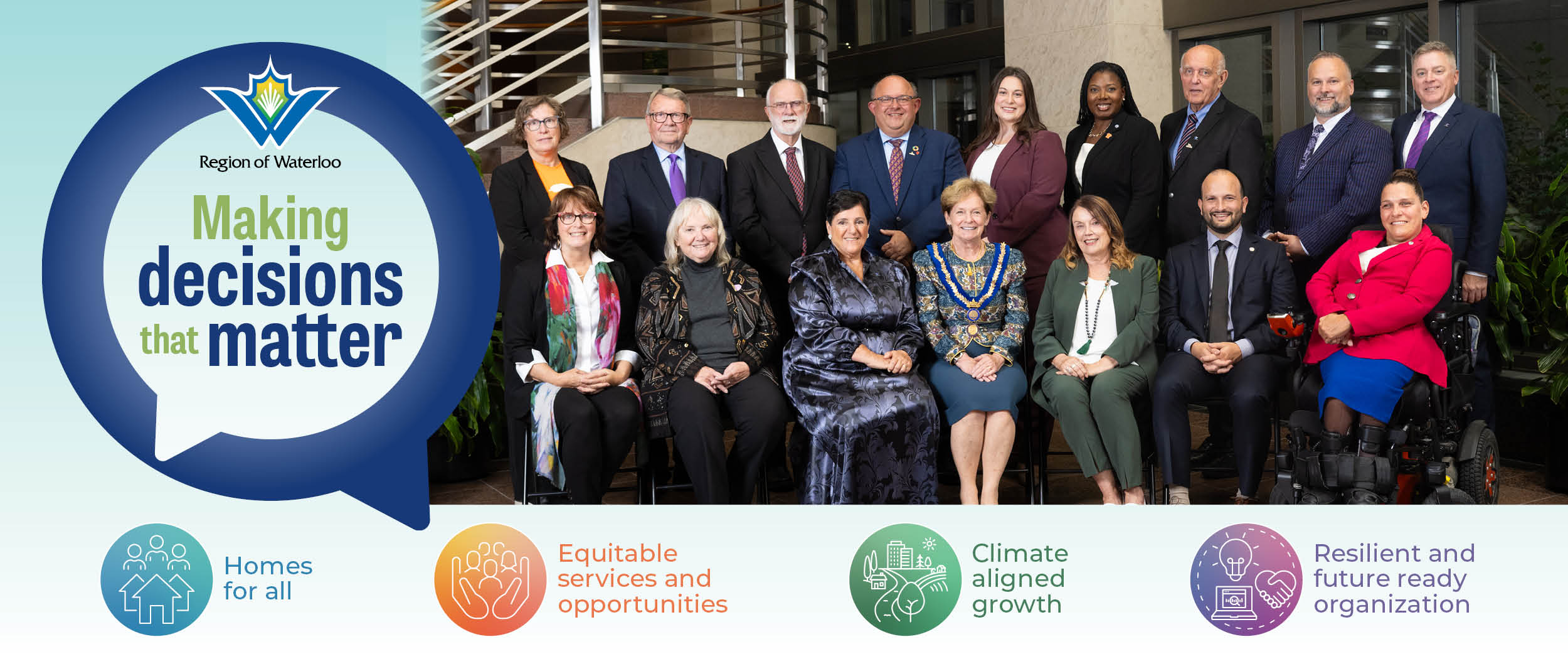
Updating the rules that guide Regional Council meetings
A new Procedural By-law will guide how Regional Council and its committees conduct meetings and make decisions. The updated by-law reflects provincial legislative changes, including Strong Chair powers assigned to the Regional Chair. It will replace the current by-law on November 15, 2026, following public notice. The changes will help keep Council’s meeting procedures clear, current and aligned with provincial requirements.
A new approach to Christmas tree collection
Starting in January 2027, the Region will partner with Family and Children’s Services Foundation (FACS Foundation) to offer a curbside Christmas tree collection fundraiser in Waterloo Region. The new approach will offer a convenient curbside collection service by volunteers, while supporting a local organization and reducing program costs. Residents will also be able to drop off natural Christmas trees free of charge at Regional Waste Management sites in January. After the new partnership launches, the Region’s current curbside Christmas tree collection program will end.
Strengthening regional accessibility advice
Regional Council approved updated Terms of Reference for the Grand River Accessibility Advisory Committee (GRAAC). The refreshed committee will focus on improving accessibility at the Region of Waterloo and the City of Waterloo, while continuing to share information and collaborate with area municipalities where appropriate. GRAAC will include 10 to 12 community members, representatives from up to two local disability organizations, municipal staff liaisons, and councillors from the Region and City of Waterloo. The membership model aims to include representation from across Waterloo Region, including the area townships.
Maintaining fast response times for the most urgent emergencies
The Region of Waterloo has set its 2027 response-time targets for Paramedic Services, as required under Ontario’s Ambulance Act. The targets remain the same as in 2026 and focus on reaching people with the most urgent medical needs as quickly as possible. Setting and maintaining these targets is a legislative requirement, supports service planning, and helps manage paramedic workloads effectively.
Supporting housing redevelopment in downtown Cambridge
A joint Tax Increment Grant will support the redevelopment of 30 George Street South in Cambridge. The former industrial property has been redeveloped into a four-storey rental apartment building with 42 homes. The grant will help offset eligible environmental cleanup costs through property-tax rebates shared by the Region and City of Cambridge for up to 10 years. This investment supports the Region’s strategic priorities by creating more housing and encouraging climate-aligned growth on previously developed land.
Helping buses move more safely
New transit priority measures will help Grand River Transit buses travel through selected intersections more reliably in Woolwich, Cambridge and Kitchener. At these locations, buses will be allowed to use designated right-turn lanes to continue straight through an intersection when appropriate. This change can help buses merge safely, reduce delays, and improve reliability and connections for customers. By-law updates also allow GRT to introduce additional transit priority measures in the future.
Supporting Township operations in Woolwich
A Region-owned property at 110 Howard Avenue in Woolwich will be declared surplus and transferred to the Township of Woolwich. The 0.56-acre property is no longer needed for Regional purposes and is next to Township-owned land used to support local salt storage operations. Bringing the two properties under Township ownership will support more coordinated management of the shared operational site.
Planning for future river crossings in Cambridge
Regional Council is calling for a new study to review how people and goods move across the Grand and Speed Rivers in Cambridge as the city continues to grow. The study will assess whether existing crossings can meet transportation needs to 2051 and remain reliable when routes are disrupted. It will also consider the potential need for new crossings for vehicles, walking and cycling, and identify corridors that may need to be protected for future use. Findings and recommendations will inform the Region’s long-term transportation and land-use planning.
Building more equitable homelessness services
Regional Council is calling for recommendations to help ensure homelessness services and investments are distributed more equitably across Waterloo Region. A report to the November 2026 Community and Health Services Committee will explore ways to improve service access and capacity in underserved municipalities, including Cambridge. It will also consider how the geographic impacts of major homelessness-related capital investments can be assessed and addressed. A Gender-Based Analysis Plus lens will be applied to help support a more equitable distribution of funding and services.
Supporting expanded access to primary care
Regional Council is calling for a grant to help the Woolwich Community Health Centre expand access to primary health care and community supports. The $81,681.86 grant will cover Regional development charges associated with the expansion project. The health centre currently serves more than 28,000 Waterloo Region residents and the expansion is expected to help connect 6,000 more residents to care.


